
Shifting the tide on malaria through partnership
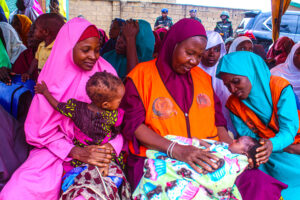
This article was co-authored by Malaria Consortium and the Solina Centre for International Development and Research (SCIDaR).
In Nigeria, a country that carries the heaviest malaria burden of any country in the world, the tides may be changing. While in 2025, it accounted for nearly a quarter of all global malaria cases and close to a third of all malaria deaths, recent data from the Nigeria Malaria Indicator Survey show that malaria prevalence in Nigeria is on the decline. The survey found that malaria prevalence among children under the age of five had decreased by almost a third between 2011 and 2025.
This progress has not been achieved in isolation. Rather, it’s thanks to the combined and dedicated efforts of many. Progress at this scale requires a combination of forces working in tandem: strategic partnerships that bring together shared expertise as well as rigorous research that builds the evidence needed for smarter decision-making. It’s this multifaceted approach that’s crucial for tackling a disease as complex as malaria. This includes developing approaches that are grounded in the local context, tailored to communities and their needs — ensuring that every visit delivers maximal impact.
Malaria Consortium, and SCIDaR have been doing exactly that. Through two complementary bodies of work: the Accelerating Malaria Control and Elimination Efforts in Nigeria (AMCEEN) subnational tailoring project and the Safety and antimicrobial resistance of mass administration of azithromycin in children in Nigeria (SARMAAN II) project, both supported by the Gates Foundation, we are contributing to a growing body of evidence that working smarter can move the needle on one of the world’s most persistent diseases. And on this World Malaria Day, we are taking the opportunity to shine a spotlight on the unmatchable power of partnerships.
Local data, stronger malaria programmes
Health programmes work best when they’re locally led and built around how communities realistically access care. Meeting communities where they are means delivering healthcare that is tailored to local realities.
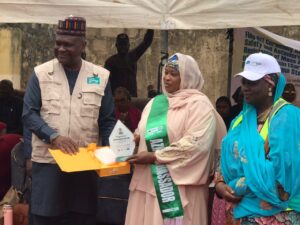
In Kano and Kaduna states, the Accelerating Malaria Control and Elimination Efforts in Nigeria (AMCEEN) project is demonstrating how it’s not just good ideas that save lives, but effective implementation. AMCEEN is generating evidence to strengthen malaria programming through subnational tailoring. This means that countries use local evidence to determine the most appropriate mix of intervention strategies for a context, and how to allocate the resources most effectively.
Under the leadership of the two state governments, with support from Malaria Consortium, the Clinton Health Access Initiative and SCIDaR, the project supports state and local government area (LGA) teams in understanding local variation in malaria burden, programme performance, and service delivery gaps, and then using these insights to identify and tailor the right interventions.
The project combines a variety of data to produce granular evidence for decision-making: household cross-sectional surveys, health facility assessments, routine data reviews and structured review meetings. This has enabled government teams to identify high-value gaps, prioritise interventions and strengthen malaria operational planning at both state and local levels.
In 2025 and 2026, the project supported all 67 LGAs across the two states to develop malaria operational plans grounded in local data and priorities, and built from the ground up, starting with LGA-level analysis and feeding directly into state planning and budgeting processes. Reviews of earlier implementation also revealed important financing and execution bottlenecks, helping teams focus attention on the areas most likely to improve results. By embedding evidence use in government-led planning processes, the project is helping limited malaria resources go further while strengthening local ownership of the response.
Making every health visit count
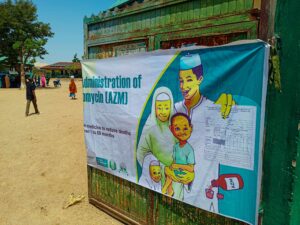
The SARMAAN II project shows how established health platforms can be used to deliver wider health benefits without starting from scratch. By leveraging existing structures, including seasonal malaria chemoprevention, neglected tropical diseases and polio programmes, the project aims to protect children under the age of five from life-threatening illnesses like malaria, pneumonia and diarrhoea through the mass drug administration of the drug azithromycin.
The health campaign aims to reach nearly over 16 million unique children across 11 northern states with the highest burden of under-five child mortality. Across Adamawa, Gombe, Jigawa, Kaduna and Kebbi states, Malaria Consortium has reached over seven million children. The campaign is delivered through a network of over 89,000 trained community distributors and health workers conducting door-to-door visits, supported by radio, town announcers and community dialogues. Using platforms like SMC, which communities in these regions already know and trust, means life-saving interventions can travel further, reaching more children in a single visit and reducing the need for additional campaigns.
Behind this activity is a network of partners — including AFENET, eHealth Africa, MITOSATH, Nigerian Institute of Medical Research and Sightsavers — working in close coordination to ensure nothing falls through the cracks. SCIDaR provides both coordination and supply chain support, working with the Federal Ministry of Health and the World Health Organization as supply chain partners to guarantee that azithromycin is available for implementing states on time ahead of each campaign cycle.
Collaborative approaches like these demonstrate how investments into the fight against malaria can be maximised, protecting children from a wider range of preventable diseases. Delivering proven health services together means fewer missed opportunities: One visit. Multiple protections. A better chance for a healthy future. In Kaduna state, community leaders have welcomed the programme. Shehu Umar, a representative of the local government area of Ikara, said, “Malaria is high in this community, with many households having at least one individual affected by the disease. The community has expressed gratitude for the medication provided.”
Closing access gaps is how we protect more people
These initiatives stand as compelling examples of what becomes possible when health interventions are grounded in evidence and move away from siloed implementation. AMCEEN and SARMAAN II underscore the case for formidable, cross-sector partnerships and for designing programmes that amplify each other, elevating impact, improving cost-effectiveness and bringing us closer to the elimination of malaria and other preventable diseases.
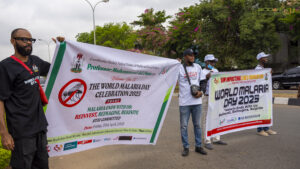
As we mark World Malaria Day, it is a reminder that we already have the tools to beat malaria and other preventable diseases. It’s time to make what works go further, working in partnership to amplify impact and reach more people. Together, we can close the gap between health services and people — and save lives.
About Malaria Consortium
Established in 2003, Malaria Consortium is a leading non-profit organisation dedicated to improving health and saving lives in communities affected by malaria and associated health inequities. Our work is rooted in providing responsive, contextualised solutions within communities, enabling them to thrive. Grounded in research and implementation science, and working closely with governments and partners, we drive innovation to narrow the gap in health outcomes and create tangible, scalable and sustainable impact.
About SCIDaR
SCIDaR is an indigenous Nigeria-based non-profit organization committed to researching and developing evidence-based approaches for implementing high-impact health interventions across Africa.
We collaborate with businesses, governments, researchers, and development organizations to create innovative solutions that address pressing development challenges. Our goal is to be a leading organization driving the acceleration of social, health, and economic development for underserved populations. We aim to improve health and social outcomes through effective program implementation, capacity building, and the dissemination of insights from rigorous research to inform policy change.