
Immunisation data shows the fragility of global health systems before aid cuts
By Rathi Guhadasan, Global Health Policy & Advocacy Advisor – Child Survival at Save the Children UK, and Alex Runswick, Director of Policy and Campaigns at Results UK.
Rathi and Alex co-chair the UK CSO Working Group on Immunisation, whose members include Global Citizen, Malaria No More UK, the ONE Campaign and UNICEF UK.
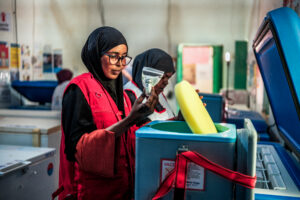
This summer saw the release of the 2025 WHO / UNICEF estimates of national immunisation coverage – an annual event which takes on extra significance this year.
This is the last dataset preceding the full force of the 2025 aid financing shock – the dissolution of USAID and European Official Development Assistance (ODA) cuts, including the UK’s move towards 0.3% of Gross National Income (GNI). Last year’s report was framed by WHO and UNICEF as immunisation coverage “holding steady”; this year’s inches forward, with global coverage of the first dose of the diphtheria, tetanus and pertussis (DTP) vaccine reaching 90% and of the full three-dose course 85% – each up by 1%, but still 1% below 2019. Crucially, the global number of zero-dose children – children who haven’t received a single dose of vaccine – fell by nearly 750,000, to 13.5 million.
This progress – hard-won against the backsliding of the COVID years – remains fragile. The world is still markedly off track to meet the globally agreed Immunisation Agenda 2030 target to halve the number of zero-dose children and avert 50 million future deaths by 2030. The fall in zero-dose children is offset by a rising number of children who start the vaccination schedule but never complete it. Progress is real, but it is neither fast enough nor secure enough – and the financing decisions being taken now will determine whether it holds.
What zero dose children reveal about health systems, fragility and funding
Zero-dose children don’t only miss out on vaccines. They are unlikely to have been touched by health systems at all. Bringing immunisation to them, brings those systems to them. A system that can transport and store vaccines can do the same for medicines. A health worker attending a child for their first immunisation dose can also check if they are malnourished or ill.
Missing out on that first dose of vaccine means missing out on the chance to survive, thrive and develop into young adults who support their communities. That wider societal return — US$54 in health and economic benefits for every US$1 spent — is what makes vaccination public health’s best buy.
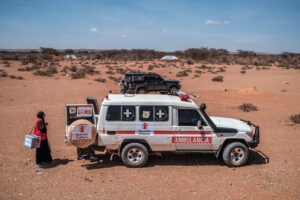
Zero-dose children are heavily concentrated in fragile and conflict-affected settings, where donor dependence is highest: more than half of them live in these countries, which are home to only around a third of the world’s children. The new data shows both the risk and the possibility in these settings. In a single year, Syria lost six percentage points of first-dose DTP coverage, while Sudan, despite its ongoing conflict, recorded the largest gain of any country in the world, lifting first-dose DTP coverage by 35 percentage points and showing what governments working with Gavi can achieve, particularly when they partner with civil society organisations to reach the hardest to reach. Funding cuts here risk abandoning the very children we need to reach the most. We cannot make progress on our zero-dose children reduction targets without directly addressing the specific needs of these conflict-affected communities.
Gavi works – and the data proves it
The headline story of the past quarter-century is one of remarkable, measurable progress – and Gavi is at the centre of it. Over the past 25 years, sustained investment from governments and partners has cut the annual number of zero-dose children by 40%. In the countries Gavi supports, the poorest and hardest to reach children today are protected against more diseases than at any point in history, with average coverage now reaching 74% across the full course of WHO-recommended vaccines.
This is what a functioning, well-funded multilateral mechanism delivers. Gavi works in the countries where most of the world’s remaining zero-dose children live — proof that its support is focused where it is needed most.
Progress must be protected
While the 2025 data shows progress, we are now in a very challenging period. Cuts to ODA spending in the UK and other donor countries have left the most vulnerable children in a precarious position. We know what works and we know what the priorities must be. Remaining ambitious in our efforts to reach zero-dose children is essential. Amazing CSOs working in Gavi-supported countries have the knowledge, expertise and trust of communities to be able to do this work. Gavi must empower and fund them. We also need to protect essential data and disease-surveillance systems: this year only 18 national immunisation surveys were submitted, down from 50 in 2024, meaning we are increasingly flying blind at precisely the moment the risks are rising.
What can the UK do?
As Gavi’s largest sovereign donor, the UK has an important role to play in ensuring that the focus on reaching zero-dose children and supporting those in fragile and humanitarian contexts is not lost. The UK must use this soft power strategically. The UK government’s upcoming G20 presidency is an opportunity for leadership in global health with a dedicated health track. Immunisation is not only one of the most impactful public health interventions, it also protects the NHS by limiting the spread of disease and supports our research and development sector and national interest. This puts into practice the genuine partnership the UK says it wants to build through international development.
Protect health systems now
Most of the aid cuts took place mid-year or are still phasing in, and immunisation systems had some protection – through existing stock already paid for, committed grant funding and health worker salaries already budgeted for up to the end of the year. So last week’s report, reflecting 2025 data, is only a forewarning.
The real damage will only become apparent in 2026-7. The problem is, if we don’t respond now, if we wait for that additional data, how many more children will we leave behind?